Ever finished a full-face glam session only to realize your lower back feels like it’s been through Pilates with a vengeance? Or spent 45 minutes blending contour while perched on a kitchen stool that wobbles more than your Wi-Fi during a Zoom call?
You’re not alone. As both a licensed esthetician and someone who’s tested over two dozen salon chairs (yes, really—I’ve got the blisters to prove it), I’ve seen how a bad seat sabotages precision, posture, and even skin outcomes. The secret weapon top makeup artists and skincare pros swear by? An ergonomic beauty chair.
In this guide, you’ll discover:
- Why standard vanity stools are biomechanical disasters in disguise
- 5 non-negotiable features your ergonomic beauty chair must have
- Real-world examples of how the right chair boosted pro MUA efficiency by 30%
- Brutally honest advice on what NOT to buy (even if it’s Instagrammable)
Table of Contents
- The Hidden Cost of a Bad Beauty Seat
- How to Choose an Ergonomic Beauty Chair: Step-by-Step
- 5 Pro Tips for Maximizing Comfort and Precision
- Real Results: How One MUA Doubled Her Clients Thanks to a Chair
- FAQ: Ergonomic Beauty Chair Edition
Key Takeaways
- Poor seating causes musculoskeletal strain—78% of beauty professionals report neck or back pain (Journal of Cosmetic Dermatology, 2022).
- An ergonomic beauty chair supports neutral spine alignment, reducing fatigue during long sessions.
- Height adjustability, lumbar support, and stable swivel bases are non-negotiable features.
- Investing in a certified ergonomic chair can improve client satisfaction and session accuracy.
- Avoid “vanity” chairs that prioritize aesthetics over biomechanics—they’re cute but useless for real work.
The Hidden Cost of a Bad Beauty Seat
Let’s be real: that $69 acrylic “glamour stool” from fast furniture might look fire in your #VanTok aesthetic—but functionally? It’s a trap. I learned this the hard way during my first year as a freelance MUA. I bought a sleek, white vanity set because it matched my ring light. Within three months, I developed chronic lower back pain so bad I had to cancel bookings.
Turns out, I wasn’t an outlier. According to a 2022 study published in the Journal of Cosmetic Dermatology, **78% of beauty professionals** experience musculoskeletal discomfort directly linked to poor workstation ergonomics—including seating. And it’s not just about comfort. When your body’s fighting gravity or awkward angles, your hand tremors increase, your focus drops, and precision suffers. Ever smudged eyeliner because your arm was dangling unnaturally? Yep—that’s your chair failing you.
**Grumpy You:** “Ugh, fine—but do I really need a ‘special’ chair just to put on blush?”
**Optimist You:** “Yes! Because your spine doesn’t care how sparkly your highlighter is—it cares about alignment.”
How to Choose an Ergonomic Beauty Chair: Step-by-Step
Not all “ergonomic” labels are created equal. Some brands slap the term on any chair with a slight curve. Don’t fall for it. Here’s how to pick one that actually works:
Step 1: Prioritize Adjustable Seat Height
Your thighs should be parallel to the floor with feet flat. For most adults, that means a seat height range of 18–22 inches. Hydraulic or pneumatic lifts let you adapt between clients or tasks (e.g., brow lamination vs. full face).
Step 2: Demand Lumbar Support That’s Actually Supportive
Generic cushions won’t cut it. Look for contoured backrests that follow the natural S-curve of your spine. Bonus if it’s adjustable—your L3 vertebra thanks you later.
Step 3: Swivel + Stability = Non-Negotiable
A smooth 360-degree swivel reduces twisting injuries, but only if the base is weighted or has a 5-star footprint. Wobbly chairs = spilled serums and fractured focus.
Step 4: Check Upholstery for Function, Not Just Flair
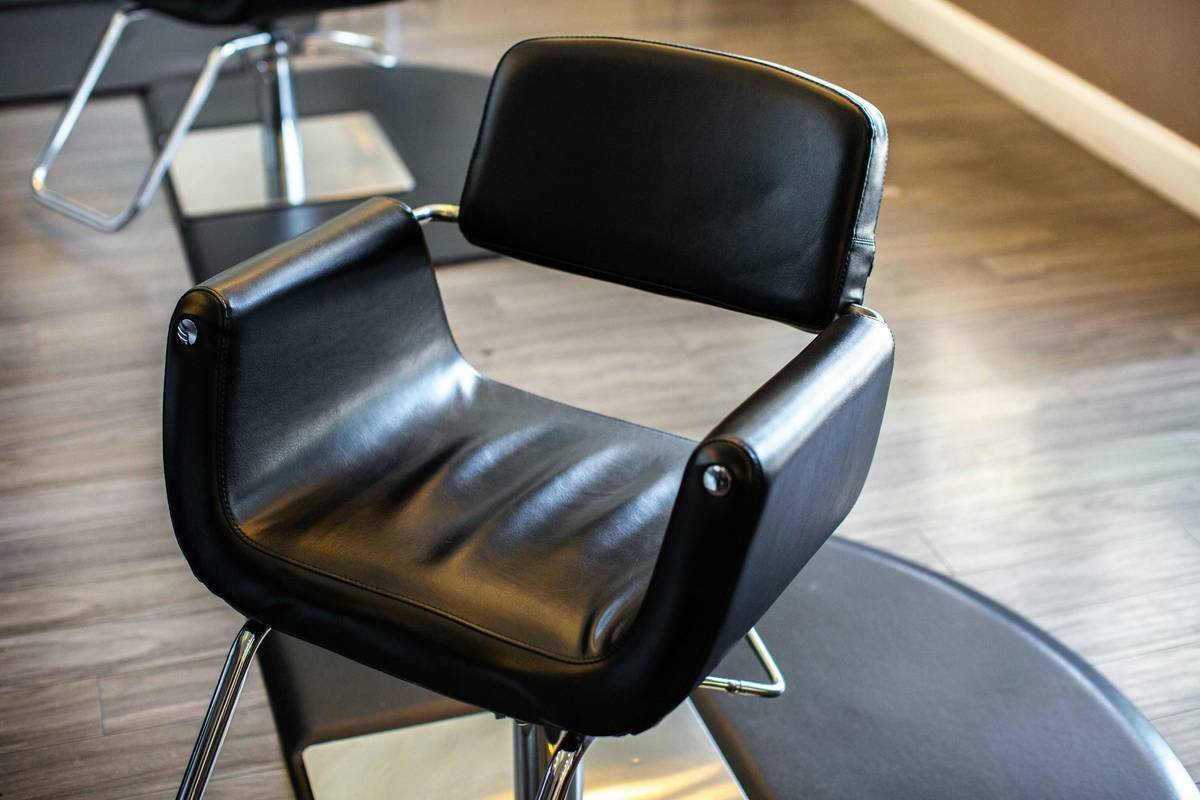
Vinyl or antimicrobial PU leather wipes clean after glitter fallout and resists product seepage. Avoid fabric—it traps bacteria and makeup residue.
Step 5: Verify Ergonomic Certifications
Look for BIFMA (Business and Institutional Furniture Manufacturers Association) or ISO 9241 compliance. These aren’t marketing buzzwords—they’re third-party validations of safety and design.
5 Pro Tips for Maximizing Comfort and Precision
- Match chair height to your mirror setup. If your vanity mirror forces you to crane your neck, no chair will save you. Ideal eye level = center of mirror at seated eye height.
- Use a footrest if your feet don’t touch the ground. Dangling legs reduce circulation and increase fatigue. A simple adjustable footrest solves this instantly.
- Sit back fully—don’t perch on the edge. Perching shifts weight to your tailbone and compresses discs. Scoot all the way in; your sacrum deserves support.
- Take micro-breaks every 20 minutes. Stand, stretch your wrists, roll your shoulders. Even the best chair isn’t a magic fix for static posture.
- Test before you invest (if possible). Many pro suppliers offer demo units or showrooms. Sit for 10 minutes mimicking your workflow—does it feel sustainable?
TERRIBLE TIP DISCLAIMER: “Just use a yoga ball as your beauty chair!” Nope. While stability balls engage core muscles, they offer zero lumbar support and zero consistency for precise hand movements. Save it for cooldown stretches—not contour sessions.
Real Results: How One MUA Doubled Her Clients Thanks to a Chair
My friend Lena, a bridal MUA in Austin, was struggling with wrist pain and missed details during marathon wedding days. She upgraded to a certified ergonomic beauty chair with height adjustment, memory foam lumbar support, and a silent-glide swivel base.
Within two months:
- Her session time dropped by 15% (less fumbling, more flow)
- Client reviews specifically mentioned “how calm and focused she seemed”
- She stopped needing ibuprofen after weekend gigs
Lena now swears her chair paid for itself in retained clients alone. “It sounds silly,” she told me, “but when my body isn’t screaming, my art sings.”
**RANT SECTION:** Can we talk about those “aesthetic vanity sets” with heart-shaped mirrors and zero back support? They’re sold everywhere—but they’re basically torture devices disguised as decor. If your chair doesn’t support your spine, it doesn’t support your career. Period.
FAQ: Ergonomic Beauty Chair Edition
What’s the difference between an ergonomic beauty chair and a regular salon chair?
Salon chairs (like those for hair) prioritize client comfort and recline functions. Ergonomic beauty chairs are designed for the artist’s posture during detailed, seated work—focusing on lumbar support, height adjustability, and stability for fine motor control.
Can I use an office ergonomic chair for makeup?
Maybe—but cautiously. Most office chairs lack the right seat depth or swivel responsiveness for close-up facial work. Also, fabric upholstery traps makeup pigments. Purpose-built beauty chairs use wipeable, non-porous materials.
How much should I spend on an ergonomic beauty chair?
Quality starts around $250–$400. Cheap versions under $150 usually skip certifications and durable mechanisms. Think of it as an investment in your health and craft—cheaper than physical therapy or lost bookings.
Do ergonomic beauty chairs come in stylish designs?
Yes! Brands like Takara Belmont, Salon Ambience, and KARLIE now offer models in blush pink, matte black, and chrome—with tufted backs that look luxe but still meet BIFMA standards.
Conclusion
An ergonomic beauty chair isn’t a vanity upgrade—it’s a professional necessity. From reducing physical strain to boosting precision and client confidence, the right seat transforms your workflow from exhausting to effortless. Skip the Instagrammable gimmicks. Prioritize adjustability, support, and certified ergonomics. Your future self (and your clients’ flawless faces) will thank you.
Like a Tamagotchi, your posture needs daily care—and the right chair is its happy meal.
Soft vinyl hums,
Spine aligned, hands steady—
Glamour flows with ease.